

Announcing the LOEWE FOUNDATION Craft Prize 2026 finalists
Following deliberations in Madrid, our Expert Panel has selected the 30 finalists for the ninth edition of the LOEWE FOUNDATION Craft Prize.
Announcing the LOEWE FOUNDATION Craft Prize 2026 finalists
Following deliberations in Madrid, our Expert Panel has selected the 30 finalists for the ninth edition of the LOEWE FOUNDATION Craft Prize.
The finalists of the LOEWE FOUNDATION Craft Prize 2026
Thirty works have been shortlisted by the Expert Panel and will be presented in the LOEWE FOUNDATION Craft Prize 2026 exhibition, opening in Singapore in Spring 2026.
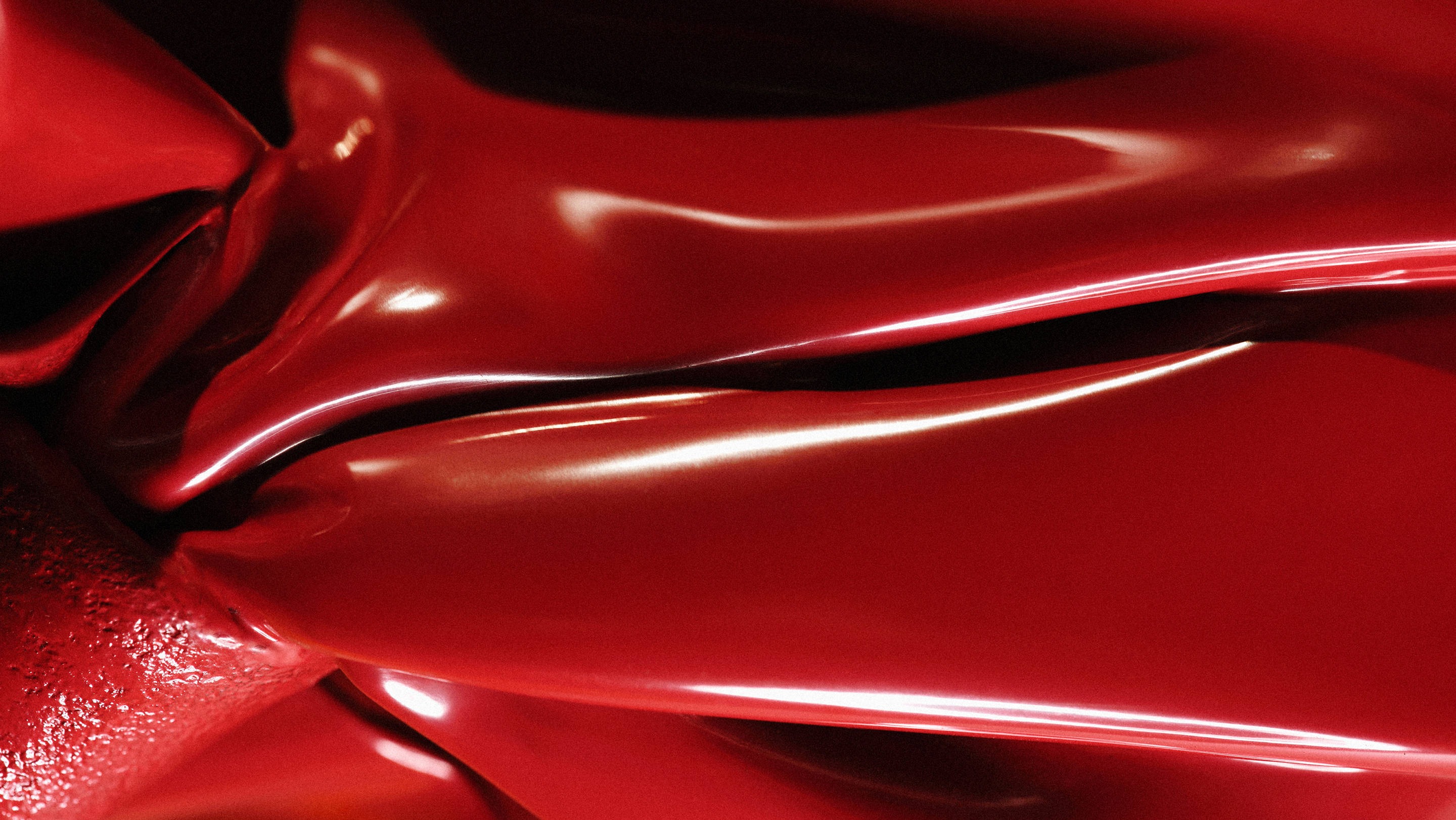
Name of finalist: Jobe Burns
Country/region of entry: United Kingdom
Name of work: ‘Laying Vessel’
Category: metal
Materials: steel, paint, lacquer

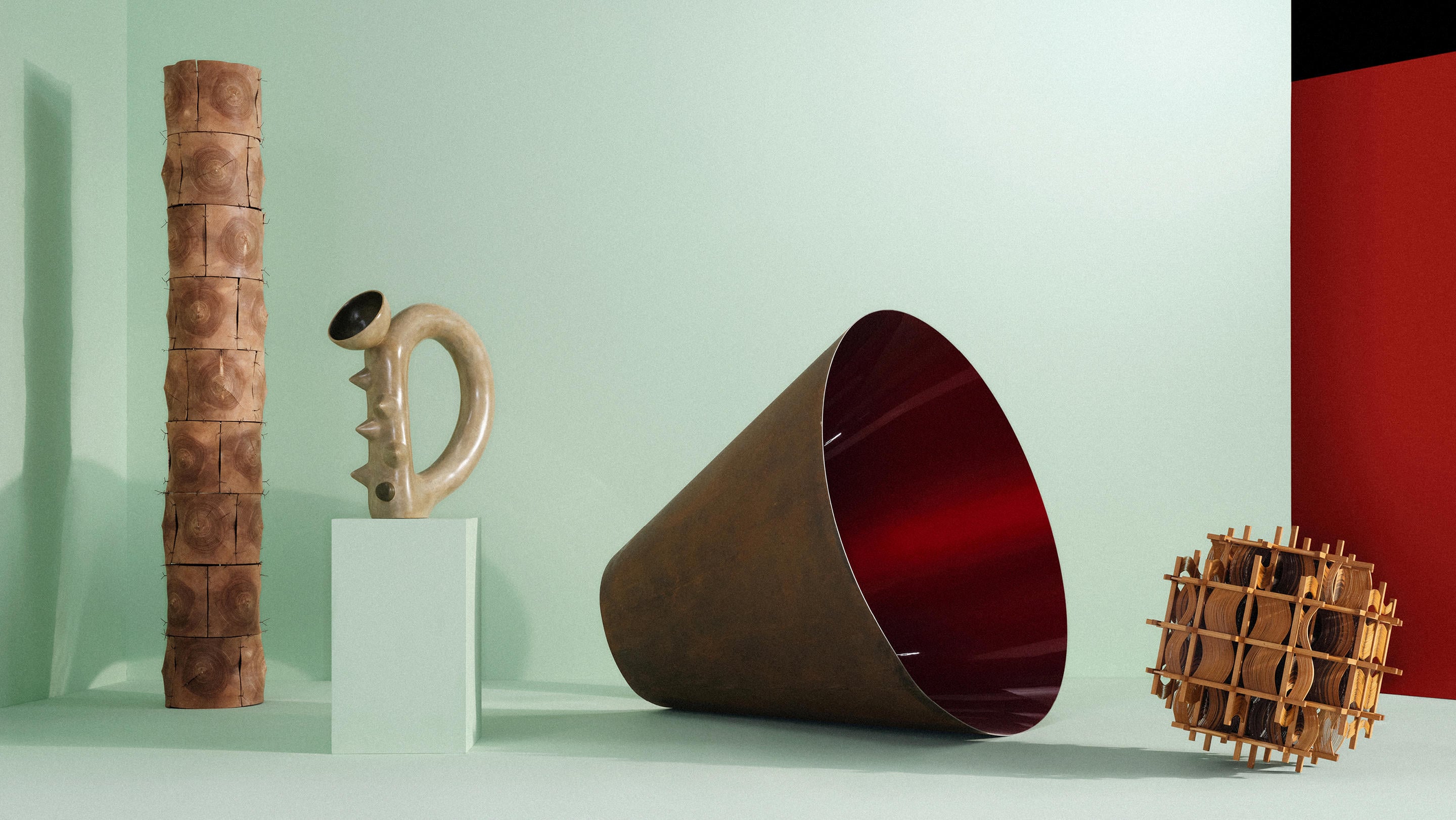
In dialogue with industrial and craft production, this large-scale sculptural vessel has been formed into a conical shape from a 3mm steel sheet at a West Midlands factory specialising in large industrial metal-forming under the artist’s supervision. A juxtaposition of finishes and textures, the interior surface has been sandblasted, welded, primed, painted, and repeatedly lacquered to produce a red sheen, while a homemade solution of hydrogen peroxide, vinegar and salt solution has been applied to the exterior to create an orange-toned rust. Through this combination of industrial process and material transformation, the vessel reflects the manufacturing heritage of its place of making and positions the vessel as a form that recalls the human body after labour— emptied but alive, an image of both exhaustion and endurance.
Name of finalist: Baba Tree Master Weavers × Álvaro Catalán de Ocón
Country/region of entry: Spain
Name of work: ‘Fra Fra Tapestry #2’
Category: textiles
Materials: natural and black dyed elephant grass

A living anthropological document, this large-scale, communally woven tapestry endeavours to preserve a threatened architectural tradition through combining contemporary technology with ancestral weaving knowledge, rooted in ritual practices among Frafra communities. Based on overhead drone photography of a circular adobe housing in Ghana’s Gurunsi region, architectural plans have been drawn in Madrid using AutoCAD and printed at scale on fabric. The textile has then been developed in Ghana by Mary Anaba and the Baba Tree Master Weavers, using traditional basketry techniques with natural and dyed elephant-grass. A two-colour pattern defines the composition, with thick dark lines indicating walls and white spaces marking interior courtyards that are freely filled with patterns and drawings by the Baba Tree Master weavers, reflecting domestic traditions shaped through collective labour.
Name of finalist: Soohyun Chou
Country/region of entry: Republic of Korea
Name of work: ‘Reconstructed Perspective Vessel 3C1L’, comprised of pieces 1-3
Category: metal
Materials: silicon bronze, copper

This group of three bronzes has been created by combining elements from two different mould sets, resulting in more complex and dynamic forms, each containing subtle variations and temporal depth. A shaped copper inner wall has been inserted into each form to create a double-layered structure and their surfaces chemically oxidized to produce a deep black patina that shifts with light. This process functions as a sculptural experiment in which perception is shaped through an ongoing relationship between viewer, object, and time.
Name of finalist: Morten Løbner Espersen
Country/region of entry: Denmark
Name of work: ‘#2572’
Category: Ceramics
Materials: stoneware, glazes

This cylindrical vessel has been wheel-thrown and glazed three times over, allowing colour to develop freely across its surface. The simplicity of the form provides a stable structure for the layered glazes, which settle into horizontal bands around the body. These bands recall archaeological strata and shifting landscapes, while the dripping and fading tones demonstrate a close engagement with Asian ceramic traditions, particularly Japanese glazing techniques. Through repetition and controlled variation, the vessel uses form and surface to emphasise the material behaviour of glaze over time and successive firings.
Name of finalist: Liam Fleming
Country/region of entry: Australia
Name of work: ‘Patterns of Pressure’
Category: glass
Materials: glass

This anamorphic glass sculpture has been made using the traditional Venetian glassblowing technique incalmo, in which the artist utilises hot glass mould-blowing and warm glass fusing to create precise, geometric structures, which are then subjected to extreme kiln heat. The artist begins by blowing two glass bubbles and using a stuffed-cup technique in which colour is applied to the external surface of the glass. The two large volumes of glass are then blown into metal moulds fabricated by the artist, hot joined inside a tall ceramic kiln, and reheated to over 600 degrees which allows the glass to relax and settle into a unified structure. Through this process, the combined form balances geometric clarity with fluid deformation, transforming rigid pillars into forms that register a moment of instability and shift.
Name of finalist: Oskar Gustafsson
Country/region of entry: Sweden
Name of work: ‘Hierarchies of Existence’
Category: wood
Materials: ash wood, copper thread, hard wax oil

This tall wooden column has been constructed from 36 end-grain sheets of ash, each steam-bent and held together by 120 twisted copper wires. Cut on a bandsaw to a thickness of 4mm from a fresh ash trunk, the sheets have been steamed to retain their curved shape against a round form before being fixed with copper thread. Rooted in natural cycles of growth and decay, the work positions wood and metal within a structure that reflects both assembly and gradual breakdown. The minimalistic method holding the structure of the column celebrates the maker’s skill and depth of his understanding of the material.
Name of finalist: Chia-Chen Hsieh
Country/region of entry: Taiwan Region
Name of work: ‘Rhythm in Grid’
Category: other
Materials: bamboo, urushi, dye

This cubic structure has been crafted entirely from bamboo, using the material as both structure and surface. A bamboo grid defines the external framework, while thousands of specially treated, ultra-thin strips have been curved, layered and suspended within the grid’s internal volume. These interwoven elements form a continuous spherical ripple pattern, pushing the inherently rigid material to the limits of its pliability. Through the relationship between square and sphere, static and dynamic, cycles of nature and constant change, the structure brings traditional bamboo craft into a contemporary sculptural context.
Name of finalist: Gjertrud Halsn
Country/region of entry: Norway
Name of work: ‘Scala’, comprised of pieces 3-5
Category: textiles
Materials: cotton and linen thread, resin

This group of three ambitiously-scaled vessels have been hand-knitted in white cotton-linen thread on a custom-built knitting ring before being coloured by hand with reactive textile dyes. The textile is dipped in resin and stretched over a cardboard mould covered with thin plastic to achieve these towering forms which are then left to harden. Once set, the vessels take on a range of functional and ritual associations, with their repeated structures suggesting networks and transformation. The graduated colours are a poetic meditation on the passage of time and light over the course of a day, from the rich darkness of the night to the bright noontime sun. They reflect the artist’s longstanding interest in Nordic mythology, particularly its deep connections to the natural world.
Name of finalist: Susan Halls
Country/region of entry: United Kingdom
Name of work: ‘Edifice’
Category: Ceramics
Materials: glazed ceramic, stoneware

This dynamic sculptural form, made of approximately hand-modelled ceramic elements, gestures towards the emotional urge to gather and notions of collectiveness. Using a wooden template, soft clay slabs have been pressed with a corrugated texture before each flat form has been folded to create a shallow, arched profile. While the clay’s fluidity allows for slight variation, overall uniformity has been maintained. Once leather-hard, the pieces have been carefully assembled into a tall architectural structure. After bisque firing, a glaze rich in copper and manganese oxides has been sprayed across the surface before a final firing at 1200 degrees, producing a dense, darkened finish with subtle tonal variation.
Name of finalist: Jong In Lee
Country/region of entry: Republic of Korea
Name of work: ‘Baeheullim’
Category: furniture
Materials: walnut wood

This sculptural bench is composed of two pieces of walnut: an upper carved from a single block to reveal accumulated grain and texture, and a lower section with vertically set grain, emphasising structural direction. Roughly shaped with a chainsaw, joined by a dovetail joint, and refined with a grinder and hand plane, the timbers expand and contract together over time, settling into a single body and creating visual balance within a potentially unstable form. Drawing on baeheullim—the subtle swelling at the waist of pillars in traditional Korean architecture—the softened silhouette recalls this form when viewed from above, connecting body and space through flowing grain and curves.
Name of finalist: Somyeong Lee
Country/region of entry: Republic of Korea
Name of work: ‘Chronicle of Matter’, comprised of ‘Chronicle of Matter 001’ and ‘Chronicle of Matter 002’
Category: wood
Materials: steam-bending oak, ocher, rope and mixed media

These two four-legged forms have been made through a slow process of bending, weaving, and binding thin, elongated pieces of oak. Steam-bent and shaped while hot to impart elasticity and tension, the pieces are joined by hand—a physical negotiation between resistance and flexibility. Ocher and string have been incorporated to create interaction between surface and structure, while the overall form adopts the architectural method of birds gathering branches to build a nest. Through a process of accumulation and cohesion, the work reconstructs materials as a metaphor for life, revealing strength and stability as outcomes of reliance, overlap, and collective support.
Name of finalist: Adelene Koh
Country/region of entry: Singapore
Name of work: ‘Endless’
Category: bookbinding
Materials: paper, embroidery threads, aluminium wire

The endband—usually hidden within a book’s spine—has been expanded here into a continuous, meditative structure where sewing, colour, and rhythm become the form itself. Sewn around a single aluminium wire core, the artist employs embroidery threads and the front bead method: an English style of endband sewing from the 18th and 19th-centuries. Hand-folded and hand-cut pages have been formed into quires, each with an additional fold along the fore-edge, then sewn by hand onto the wire core. Through this process, a binding element typically concealed within the book has been transformed into a circular architectural form, treating bookbinding as a sculptural language defined by colour, rhythm and repetition.
Name of finalist: Maria Koshenkova
Country/region of entry: Denmark
Name of work: ‘Faun’s Flesh (Arena Rosada)’
Category: glass
Materials: blown sculpted glass, vintage found glass

This glass sculpture has taken the form of a low, contorted mass with a dense, layered surface that folds and compresses in on itself. Incorporating found vintage glass, this work has been developed through multiple blowing sessions alongside extended kiln firings, cold-working processes, and silvering. Colour has been built up intuitively, producing viscous transitions and painterly depth across the surface. Working with the assistance of the Holmegaard Værk glass blowing team, the artist has combined improvised methods and self-devised tools to push the material toward sinuous, muscular forms, extending the boundaries between glass and sculpture through a process shaped as much by material response as by pre-drawn designs.
Name of finalist: Misako Nakahira
Country/region of entry: Japan
Name of work: ‘Interaction #YB’
Category: textiles
Materials: wool, cotton

This tapestry has been constructed on a stretched cotton warp, forming a soft, folded surface that sits between painting and sculpture. Fine blended wool weft threads (‘mokuito’) have been handwoven, creating striped patterns in blue and yellow that overlap and disrupt one another. Subtle shifts in colour density produce illusions of layered depth across the pliable form. The reverse side is left visible, and the tapestry holds no fixed orientation, allowing light, movement and viewing position to continually alter its appearance. By destabilising the order of stripes on a fluid textile surface, the work confronts the tension between structure and ephemerality.
Name of finalist: Fadekemi Ogunsanya
Country/region of entry: Nigeria
Name of work: ‘We Are Not Lying, Your Language is Not Enough’
Category: textiles
Materials: cotton fabric, plastic beads, cotton and polyester paddingn

This hand-embroidered and beaded quilt has been created using the traditional Nigerian resist-dyeing technique known as Adire Eleko, a practice historically used as a visual language for communication, symbolism, storytelling and mythology. Using a feather quill, swirling patterns have been drawn across 15 segments with lafun, a cassava starch paste traditionally prepared by Yoruba women, while the surrounding border carries Yoruba script referencing proverbs and folklore. The cloth has been dyed in the historic Kofar Mata indigo pits in Kano, Northern Nigeria. After dyeing, the resist has been washed away and the surface embroidered and hand-beaded to highlight the motifs, before being padded with cotton batting to give the textile depth and structure.
Name of finalist: Jieun Park
Country/region of entry: Republic of Korea
Name of work: ‘Seed of Circulation’
Category: metal
Materials: oxidized sterling silver, linen thread

Rooted in natural rhythms of expansion and contraction, this dense sculptural form has been assembled from thousands of handmade small sterling silver fragments, creating a compact, clustered, bulbous profile. These fragments are connected individually using linen thread, producing a flexible yet self-supporting surface. The repeated process generates a rhythmic pattern that balances regularity and variation, allowing the form to expand and contract while maintaining structural coherence. Like a seed, the form combines resilience and flexibility, containing the potential for expansion.
Name of finalist: Jongjin Park
Country/region of entry: Republic of Korea
Name of work: ‘Strata of Illusion’
Category: Ceramics
Materials: porcelain, paper, stain, glaze

This warped rectilinear seating form has been built through stratified layering to form a compact ceramic volume. Sheets of paper have been coated with porcelain slip tinted with hand-mixed pigments, then folded, stacked and compacted by hand into a rectangular mass. Natural creases, compressions and shifts have been retained on the surface during shaping. After drying, the form has been oxidation-fired at 1280 degrees, converting the paper layers into a single ceramic body. Warping during firing produces an irregular, hollowed profile, which has then been reworked with electric tools to refine surface and structure. The work reflects the artist’s fascination with the instability of matter and captures the tension between control and collapse.
Name of finalist: Rafael Pérez Fernández
Country/region of entry: Spain
Name of work: ‘Time To Time’, comprised of pieces 1-3
Category: ceramics
Materials: porcelain, clay

With these three porcelain forms of equal size and weight, the artist accelerates the natural processes of degeneration and deformation—a rebellion against the natural order and passage of time. Beginning as sharply defined geometric blocks, the works have been fired at 1250 degrees in a gas kiln to force structural failure within the material. The once rigid outer surfaces in white, grey and black split and displace, exposing compressed, crumpled interiors that resemble layered paper or folded sheets. These interiors push outwards from the original water-tight volumes, leaving fractured edges and shifting planes. Through controlled firing, the ceramic sequence records deformation as a physical process embedded within the porcelain itself.
Name of finalist: Dorothea Prühl
Country/region of entry: Germany
Name of work: ‘Migratory Birds’
Category: jewellery
Materials: titanium, gold

This necklace features two large, yet lightweight birds, formed from titanium and suspended from a slender gold chain. The chain has been arranged in equal lengths above and below the birds, each fixed in place by lugs. The sheet metal has first been hammered to create indentations, then folded at the wings to achieve its final sculptural form. Through deformation and material hardness, the work has been engineered to maintain stability while emphasising scale and lightness within a wearable structure. With this work, the artist draws closer to her conception of magnitude and weightlessness, as well as to the shared archaic yearning—between artist, viewer, and wearer—to be able to fly.
Name of finalist: Kirstie Rea
Country/region of entry: Australia
Name of work: ‘Repose 2’
Category: glass
Materials: glass

Taking the form of an elongated, undulating sheet, this glass sculpture has been made from a single piece of glass cut and shaped using traditional tools before undergoing four kiln firings. Coloured powders have been added during the first firing, followed by a second firing to corrugate the surface, a third to compress the corrugations, and a fourth the gently bend the sheet into its folded form. The resulting work holds a shallow, open profile, balancing firmness and fragility while emphasising the material’s capacity for controlled movement and structural softness that translates the delicacy of the natural landscape into tangible forms.
Name of finalist: Vivi Rosa
Country/region of entry: Brazil
Name of work: ‘Resonance’
Category: other
Materials: cement, recycled glass powder, shredded cotton, wire, adhesive

This curved, lyrical vessel has been handcrafted from an authorial composite material developed by the artist, which dries at room temperature and does not require firing while maintaining high resistance to weathering. The material combines recycled crushed glass, repurposed shredded cotton, adhesive, pigments and cement. Recyclable materials collected from discarded sources have been incorporated into the interior as a structural base. The surface has been built up in layers, sculpted and hand-polished, then finished with resin and vegetal wax, giving the form durability and tactile depth.
Name of finalist: Hervé Sabin
Country/region of entry: Haiti
Name of work: ‘Sèvi-Tè’
Category: wood
Materials: wood, beeswax, oil paint

This elevated bowl is part of a series of functional wood sculptures that have been carved, sanded, charred and ebonised using mineral oil and beeswax. Hollowed from a single piece of wood, the form retains the material’s natural grain and irregularity while undergoing surface transformation through burning and finishing. A small red wooden support has been integrated beneath the vessel, subtly lifting the charred body from the ground. Drawing on ancient techniques of hollowing wood for communal use, the vessel places historical craft into dialogue with contemporary form through a precise structural intervention.
Name of finalist: Xanthe Somers
Country/region of entry: Zimbabwe
Name of work: ‘The Caretaker’s Clotheshorse’
Category: ceramics
Materials: glazed stoneware

This large stoneware vessel has been formed around an interior frame that has been slowly coiled by hand, then punctured and weighted to create its collapsing silhouette. Inspired by traditional Zimbabwean Binga baskets, a woven-clay technique has been applied to the exterior, producing a surface that folds, holds and subtly frays under its own weight. Once bisque fired, the vessel has been intricately painted, referencing grass baskets alongside blankets, kitchen cloths and other domestic textiles. The tension between vitality and burden gives physical presence to forms of care and domestic labour that are often invisible, holding resilience and strain within a single structure.
Name of finalist: Coco Sung
Country/region of entry: Republic of Korea
Name of work: ‘Shadow Kkokdu’, comprised of ‘Optak’, ‘Liebero’, ‘Pupillove’, ‘Bongja’ and ‘Pupsi’
Category: jewellery
Materials: clay, lacquer, coloured wire, beads, Swarovski stones

These small, upright figurative forms have been entirely handmade using clay, beads, coloured wires, thread, lacquer and Swarovski stones. The forms are first constructed with wire and thread, before clay is applied to define the body and structure. Colour, beadwork and drawing are then layered onto the surface, creating concentrated points of reflection and ornament. The series reinterprets Kkokdu—figures from Korean funerary tradition who guide and protect the soul at the threshold between life and death. Shaped as shadow-like talismans, the works embrace individuality and difference, warmth and humour, transforming mourning into a tactile language of care in the face of loss.
Name of finalist: Nobuyuki Tanaka
Country/region of entry: Japan
Name of work: ‘Inner side – Outer Side 2021 N’
Category: lacquer
Materials: lacquer hemp

This tall, anthropomorphic vessel is a hollow, freestanding form informed by the vessel as a symbol of the body and made using the dry lacquer kanshitsu technique. Layers of hemp cloth have been built up over an inner styrofoam prototype, later removed to leave a lightweight, self-supporting structure approximately 5mm thick. Black lacquer has been applied in successive layers, each dried and polished with charcoal before final refinement. Repeated five times, this process has produced a smooth, reflective surface that emphasises the vessel’s continuous curves and upright presence.
Name of finalist: Graziano Visintin
Country/region of entry: Italy
Name of work: ‘Collier’, comprised of pieces 1 and 2
Category: jewellery
Materials: gold, Niello

These two necklaces are composed of cubes of varying size and form, built from thin sheets of gold and decorated with painted niello. Resistance motifs, particularly geometria, inform the pair, while gold is treated as both structure and surface. The niello is not fixed into engraved lines, as in traditional applications, but applied in informal brushstrokes, leaving the metal encrusted and marked. As light moves across the necklaces, the softness of gold contrasts with the deep black presence of niello, creating a shifting interplay between colour and reflection.
Name of finalist: Rayah Wauters
Country/region of entry: Belgium
Name of work: ‘A Turn Toward Possibility’
Category: wood
Materials: Belgian poplar wood, black ink

Formed as a compact, hollow volume, this work is composed of fine, hair-like fibres extracted from solid poplar wood using reshaped traditional woodturning tools and a custom-engineered mounting system. Each strand has been turned, combed, and dipped in black ink, which has been absorbed and drawn through the exposed fibres by capillarity and gravity. Variations in diameter and position produce shifts in density, from compact to wool-like. Originating from an error at the woodturning lathe, the process treats failure as method, transforming poplar—one of Belgium’s most harvested yet often undervalued tree species—into a woven-like structure defined by surface and tactility.
Name of finalist: Nan Wei
Country/region of entry: China
Name of work: ‘Knot-Loving’
Category: lacquer
Materials: lacquer, cow leather, linen

To create this lacquered leather form, the artist has first stretched leather into a three-dimensional shape and impregnated it with raw lacquer, establishing lacquer as the hardening medium throughout the structure. Two external layers of linen are then applied, followed by four layers of scraped ash powder, each secured with lacquer. Five further layers of lacquer are subsequently built up, resulting in a form that is lacquered throughout its entire thickness rather than treated solely at the surface. The exterior is extensively sanded and polished to achieve a smooth, high lustre finish, while the interior has retained its original appearance. By reworking the Japanese Shippi lacquer technique, which traditionally relies on the softness and elasticity of leather, the work situates lacquer craft within a contemporary, hand-scaled, fashion-orientated material context.
Name of finalist: Jane Yang-D’Haene
Country/region of entry: United States
Name of work: ‘Untitled’
Category: ceramics
Materials: stoneware, porcelain, glaze

This oblique jar has been formed from a blend of stoneware clay and porcelain shaped into a rounded, asymmetrical form. Hand-coiled and marked with drawn and calligraphic lines, the surface has been repeatedly fired to build layers of impasto glaze over the incised marks. These successive firings produce a dense accumulation of textures and tones across the surface. Drawing on the proportions of the traditional Korean Moon Jar alongside Western painterly surfaces, the work brings ceramic form and painted gesture into a single, layered object that speaks to both the artist’s own emotions and memories and larger histories of cultural heritage.
Name of finalist: Ayano Yoshizumi
Country/region of entry: Japan
Name of work: ‘ICON #2507 Group’, comprised of ‘ICON #2507 No. 2’ and ‘ICON #2304 No. 3’
Category: glass
Materials: glass, acrylic paint, glitter

Treated as “three-dimensional canvases,” these two expressive glass sculptures have been hand blown into static moulds, then shaped and hot-torched to produce soft curves. While the moulds establish a structured base form, targeted heating has introduced twists and distortions that give the impression of movement within the glass. Colour patterns have emerged through this process, reflecting the material’s liquid state and emphasising shifts between interior and exterior space. Combining traditional mould blowing with experimental torch work, the works explore the transformative potential of hot glass through controlled deformation. Influenced by Fauvism, Minimalism, and with an awareness of “Ma”—the Japanese aesthetic sensitivity of space—colours, shapes, and light are composed as characteristic elements within the glass.
Digital exhibition 2025 and The Room
Explore the LOEWE FOUNDATION Craft Prize through our digital exhibition, which presents the 30 shortlisted pieces alongside insights into the artists and their processes, as well as exclusive studio tours. The 2025 finalists showcased works spanning a wide range of mediums, including ceramics, woodwork, textiles, furniture, paper, glass, metal, jewellery and lacquer.
Discover The Room, our permanent online archive featuring over 2,800 works by LOEWE FOUNDATION Craft Prize alumni, where you can explore artists, filter works and find pieces currently available.
From the shortlist, a jury composed of 13 leading figures from the world of design, architecture, journalism, criticism and museum curatorship, including Kunimasa Aoki, winner of the LOEWE FOUNDATION Craft Prize 2025, will select the winner of this year's Craft Prize.
The winner will be awarded a €50,000 prize, with the announcement to be made in spring 2026.
The Expert Panel considers all works presented and submit to the Jury a shortlist of 30 one-off works which they consider most outstanding, representing excellence, newness, innovation and artistic vision in modern craft.
Watch a conversation on modern craft here.
Read the Rules of Entry and make sure you comply with all requirements. All participants must be professional artisans 18 years or older. Entries may be made by an individual or collective (as a ‘group submission’). All nationalities are welcome.
Make sure the work: demonstrates artistic intent as well as technical proficiency, is an original piece that is handmade or partly handmade, has been created within the last five years, is one-of-a-kind and has not previously won any prizes, is innovative in the sense that it updates tradition, and falls within the field of applied arts such as ceramics, bookbinding, enamelwork, jewellery, lacquer, metal, furniture, leather, textiles, glass, paper, or wood.
Complete the online registration in English: you need 2 to 5 photographs of the work (or series) and optionally a video, a brief conceptual statement about the work, and to submit your application by 30 October 2025.